Can I Get a Job Without a Career Coach? Honest Answer
Can I Get a Job Without Hiring a Career Coach?
Short answer: yes.
Longer answer: yes, but most people who try end up wasting six months proving they can't.
Not because they're not smart enough. Not because they're not qualified. But because they don't understand how recruiters actually work, how hiring decisions are actually made, and they overthink themselves into a corner where nothing they do moves the needle.
So let's have an honest conversation about it. I spent over eight years as a recruiter placing candidates in senior roles across 50+ countries before I started coaching. I'm going to tell you exactly what you'd need to do to land a job without a coach, what most people get wrong, and — being totally transparent — when hiring one is genuinely worth it and when it's not.
No pitch. Just the truth.
The three things almost everyone gets wrong
1. They think recruiters find jobs for people
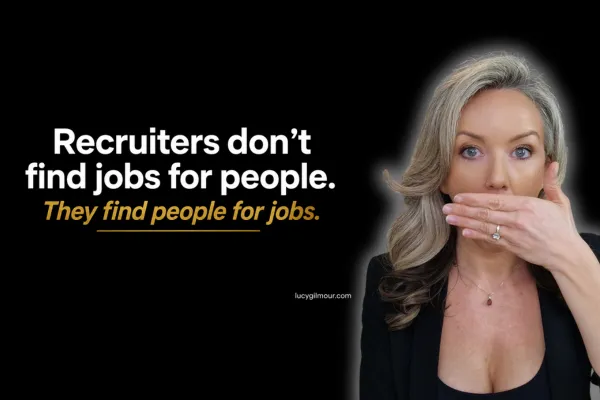
Recruiters don't find jobs for people. They find people for jobs.
Read that twice. It's the single biggest misconception in job searching.
A recruiter has a client. The client has a vacancy. The recruiter's job is to find the best possible candidate for that specific vacancy — not to find a job for you. You are not the customer. You are the product.
Now, if you happen to be in the top 1-2% of candidates in their niche — beautifully positioned, easy to place, low-risk — then yes, a good recruiter might proactively market you to their clients. But that's rare, and getting into that 1-2% takes a lot of work most people never do.
So if you're sitting around waiting for recruiters to call you, hoping the right opportunity will land in your inbox, you're going to wait a very long time. You have to take charge of your own search. Full stop.
2. They think knowing they can do the job is enough
Here's the second hard truth: hiring managers and recruiters only care if you meet the requirements.
That sounds obvious. It's not. Because there's a massive gap between knowing you can do the job and proving you can do the job on paper — and on LinkedIn — in a way that matches what they're actually asking for.
Most candidates assume their experience speaks for itself. It doesn't. The recruiter scanning your CV in 7 seconds isn't reading between the lines. They're looking for a specific match against a specific brief. If your CV says "extensive clinical research experience" and the brief says "5+ years in oncology-focused CRO," you're out — even if you've spent six of those years in oncology. You just didn't say it the way they need to hear it.
This is why a perfectly qualified candidate can send 80 applications and get zero interviews. It's not that they can't do the job. It's that they haven't translated their experience into the exact language of the role.
3. They overthink themselves into paralysis
This is the one that wastes the most time.
People spend weeks — sometimes months — perfecting a CV that recruiters will never see, because they haven't done the one thing that gets it in front of anyone: direct outreach.
And when they do finally reach out, they overthink that too. They write long, lengthy, AI-assisted messages that sound polished but feel completely robotic. Because in 2026, everyone's using ChatGPT to write their outreach. Which means the candidates who stand out are the ones who write short, blunt, human messages that get straight to the point.
A three-sentence message that says "here's the role, here's why I match the requirements, can we talk?" beats a beautifully-crafted AI essay every single time.
What the DIY playbook actually looks like
If you're going to do this without a coach, here's the absolute minimum you need to nail. None of this is optional.
1. A LinkedIn profile positioned for the exact job title you want. Your headline needs to include the job title, your level of experience, your niche, your sector, the keywords recruiters search for, and your achievements. Not a vague "Strategic leader passionate about innovation." The actual title someone would type into LinkedIn Recruiter to find you.
2. Direct outreach to hiring managers — not recruiters. Use a three-sentence outreach message. Forget volume. Focus on fit. The question isn't "how many can I send a week," it's "did I do the upfront work to confirm I actually meet the requirements?" If you do, send it. If you don't, you're wasting your time and theirs.
3. A CV that mirrors the job description. Use their exact terminology. If they want "5 years in an oncology-focused CRO," your CV says "5 years in an oncology-focused CRO." Not "experience working alongside oncology teams." Not "clinical research background." Their words, your match.
4. Interview prep that means you walk in cold to nothing. Research the company. Understand the salary bands for that role at that level in that market. Prep your stories. You should never be doing your thinking on the spot — it's almost impossible to perform under pressure if you haven't already done the work.
5. Salary negotiation that starts before the first interview. Negotiation isn't a conversation at the end. It's positioning, intelligent questioning, and gathering intel throughout the process before you commit to any number.
6. Create content that builds your perceived value. This is the one most candidates skip. We're in a competitive market. If you're publishing content that demonstrates your expertise, employers see you before you ever apply. Done well, this is how you get headhunted instead of applying online.
That's the playbook. It works. But here's what I want you to hear clearly: doing all six of those things, properly, on your own, is a full-time job.
The real reason most DIY job searches fail
There are literally millions of articles on Google about how to job search.
I've published 450+ videos on my YouTube channel alone.
The problem isn't a lack of information. The problem is you don't know which advice is most relevant to your situation, your industry, your level, your goals. So you end up reading everything, second-guessing everything, and doing nothing.
You spend the day "researching." You doom-scroll LinkedIn. You rewrite your CV for the fifth time. You watch another YouTube video. You feel productive. You're not. You're compensating for the fact that you don't actually know what you're doing — and that compensation is eating hours, days, weeks, months of your runway.
That's the real argument for working with a coach. Not that you can't figure it out alone — you can. It's that a coach hands you the right path for your situation, cuts out everything that doesn't apply to you, and saves you the months of trial and error.
So who actually needs a coach — and who doesn't?
Let me be ruthlessly honest, because this is the section that matters.
You probably don't need a coach if:
You're already landing interviews. You're clearly doing something right on the positioning side. The "getting in the door" piece isn't your problem.
You're getting offers but turning them down because they're not the right fit. You don't have a job search problem — you have a targeting problem. Get sharper on what you actually want and where you're applying. A coach can help, but it's not essential.
A coach will genuinely help if:
You're applying and applying and not landing interviews (positioning issue)
You're landing interviews but not converting them into offers (interview/storytelling issue)
You're a career changer with no obvious path from A to B
You're senior or exec level where one offer represents a £20-50k+ difference and getting it wrong is expensive
You're returning from maternity, caring, a sabbatical, or any kind of break
You've been job searching 3+ months with no real traction
Your runway is tight and you need speed, not experimentation
Even if you fall into the "fine alone" camp, a coach will expedite the process. The question is whether the time you'd save is worth the investment to you. That's a personal calculation, not a universal one.
Three clients. Three different lessons.
Archie followed my Instagram content for six months before she reached out. Six months of consuming free advice, taking notes, trying to do it alone — even with a background in HR and recruitment-related functions herself. She knew the theory. What she didn't have was someone to point her at the specific moves that would work for her situation. The information wasn't the problem. The curation was.
Mark was one of my early clients. He'd sent over 80 applications and not landed a single interview. He came on a call with me and had a complete eureka moment within the hour — once he understood how recruiters actually read CVs and how to mirror the requirements in his own language. He sent another six applications after that. He got four interviews. The difference wasn't him. The difference was someone showing him, as a former recruiter, exactly what hiring teams are looking for.
Nikki told me she would have never reached out to hiring managers before joining my program. She'd been writing half-page and full-page cover letters, terrified that something shorter would look lazy or unprofessional. She used my short, blunt, three-sentence outreach to message a CEO directly. She had a job 48 hours later. The thing she was most scared of doing was the thing that worked.
Notice the pattern: none of these people lacked intelligence, experience, or qualifications. What they lacked was an insider showing them what actually moves the needle versus what just feels productive.
The honest bottom line
Can you get a job without a career coach? Yes. Absolutely.
But you need to be realistic about what it takes: the right strategy, executed consistently, while everyone around you is telling you to mass-apply online and "stay positive." You'll need to ignore most of the generic advice on the internet. You'll need to resist the urge to overthink. And you'll need to accept that the work is significant.
If you've got the time, the discipline, and the willingness to learn what actually works in modern hiring — go for it. The playbook is above. Save it. Use it.
If you don't have that kind of runway, or you'd rather skip the months of figuring it out alone, that's where a coach genuinely earns their fee.
When you're ready, there are a few ways I can help:
Free — Keep watching me on YouTube. I've got 450+ videos covering pretty much every angle of modern job searching.
Guided — Join Job Search Unlocked, my membership program with access to Lucy AI for instant, personalised feedback on your CV, LinkedIn, outreach, and interview prep.
Premium — If you're a more serious job seeker who wants 1:1 support, get in touch about my Career Growth Accelerator — designed to get you hired in 60 days or less, without applying online.
The information is free. The shortcut isn't. Choose whichever fits where you're at.